
The End of the Skin Fade? Men’s Hair Trends for Fall 2026 in Stamford
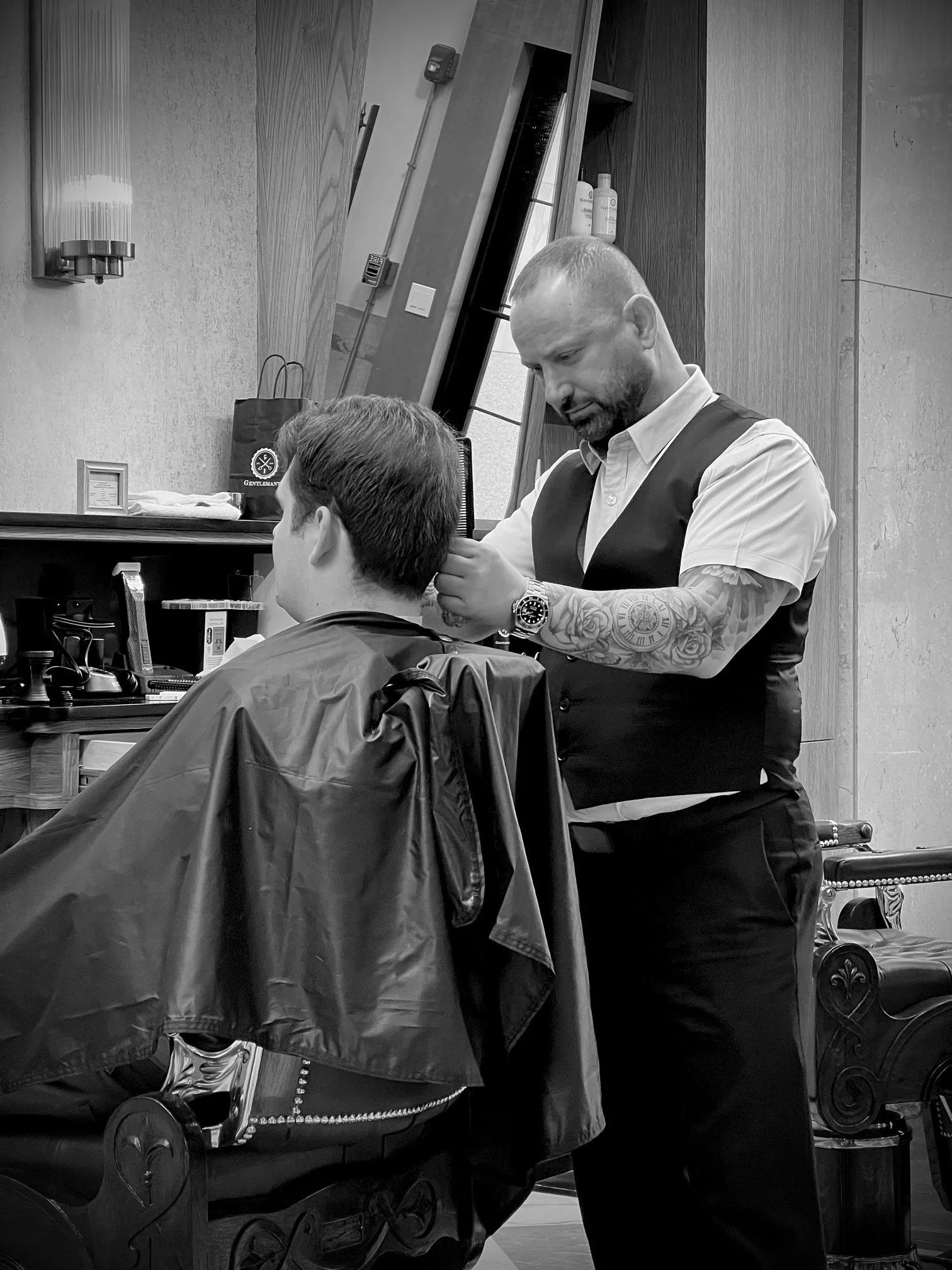
For the better part of a decade, the skin fade became almost synonymous with a modern men’s haircut: tight sides, exposed scalp, sharp contrast and an unmistakably fresh-from-the-barber finish.
But going into Fall 2026, something is changing.
Skin fades are not disappearing, but the most noticeable movement in men’s hair is away from extreme contrast and toward softer tapers, scissor work, natural necklines and haircuts that retain more movement.
GQ put it particularly clearly in its 2026 haircut coverage: short hair is becoming “quieter and more tailored,” with stylists seeing a move away from extreme fades and sharp disconnections toward softer tapers and cuts designed to grow out well. In a separate article, GQ went even further, declaring that men are increasingly ditching fades for fuller, more malleable hairstyles.
For a man in Stamford who wants to look current without looking like he just stepped out of a barbershop every 10 days, that is a useful shift.
The new goal isn't messy.
It’s less severe.
Why Men’s Hair Is Getting Less Severe in 2026
A softer haircut does not mean an imprecise haircut.
It means the barber is using precision to create a transition that is deliberately less obvious.
Instead of shaving the sides down to bare skin and creating dramatic contrast with the top, a low taper or scissor taper preserves more hair around the ears and back of the head. The silhouette can still be exceptionally clean, but the haircut becomes part of the overall look rather than the first thing you notice.
That philosophy is showing up across men's style.
GQ's 2026 trend reporting describes modern men's cuts as increasingly less severe, with longer sides, more texture and hair that looks naturally styled rather than rigidly constructed. Celebrity hairstylist Jae-Manuel Cardenas, a senior stylist at Ollin Salon in New York City, described the emerging look as more tousled and easy, with longer layered sides rather than shaved ones.
Fall menswear is moving in much the same direction.
Vogue's Fall 2026 coverage has repeatedly emphasized relaxed tailoring, tactile fabrics, understatement and restraint. At Tod's, the idea was “equilibrium, not showing off.” Kith's fall collection revolves around texture, patina and dimensionality, while Canali is pairing traditional tailoring with more relaxed silhouettes intended to move easily through different parts of a man's day.
The haircut equivalent is fairly obvious:
precise, expensive-looking and intentional without needing to announce itself.
Skin Fade vs. Soft Taper: What’s the Difference?
The distinction matters because “fade” and “taper” are frequently used interchangeably even though they can produce very different results.
A traditional taper gradually shortens the hair around the ears and neckline while maintaining visible hair at its shortest point. A fade typically takes the hair substantially shorter and can transition all the way to bare skin. Professional barbering sources describe tapers as generally providing more scalp coverage and less contrast.
The practical distinction is simple:
If you like your haircut to look crisp without seeing a band of exposed scalp around your head, tell your barber you want to retain some weight through the sides and use a low or scissor taper rather than a skin fade.
The Haircuts Stamford Men Should Know About for Fall 2026
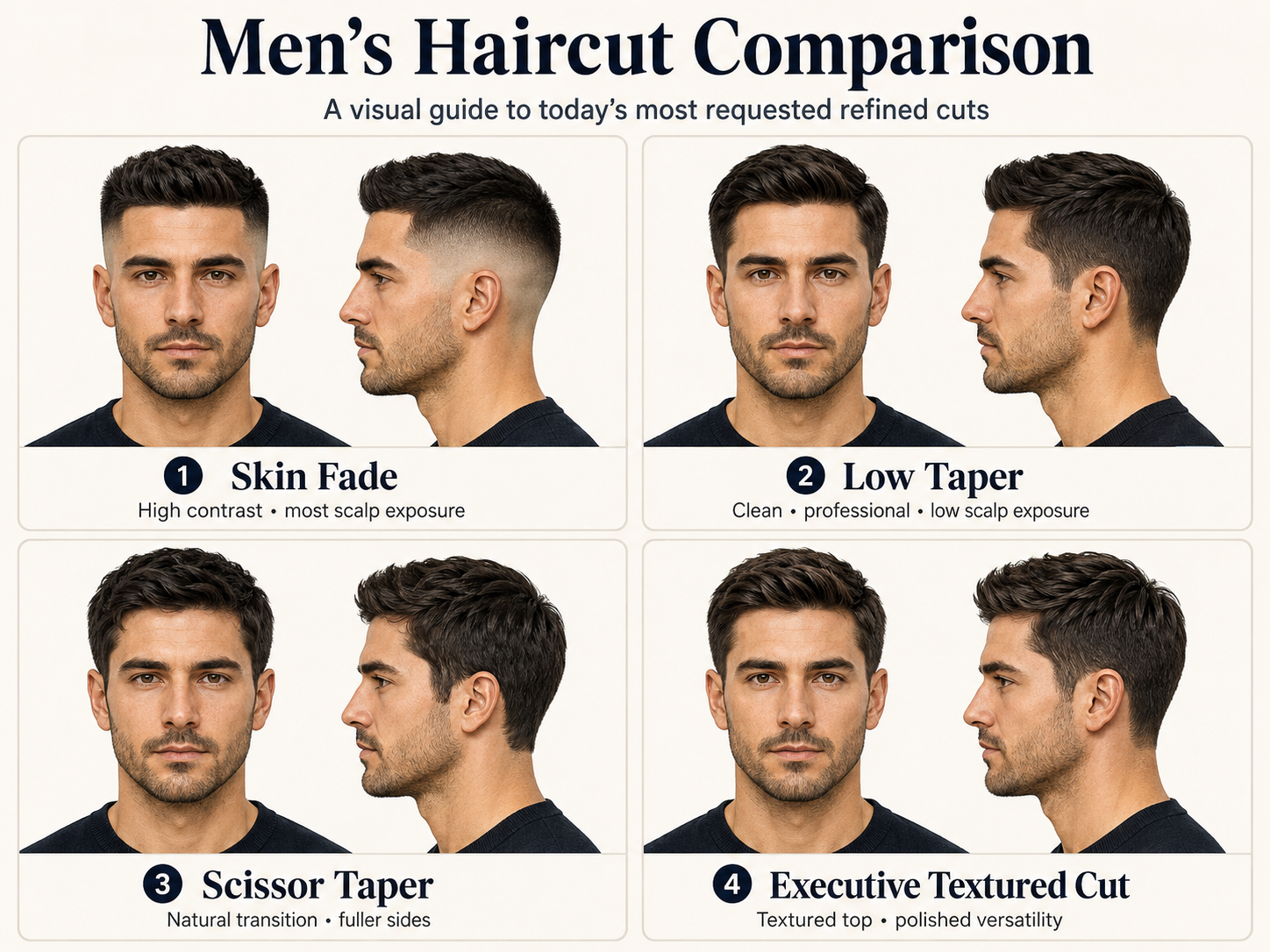
The shift away from aggressive fades does not mean men are moving toward one specific haircut. The more useful way to think about Fall 2026 is as a spectrum, from high-contrast clipper work to fuller, more natural-looking cuts.
1. Skin Fade
The skin fade remains the sharpest and highest-contrast option.
The sides and back gradually transition down to bare skin, creating a very crisp finish and making the difference between the top and sides immediately noticeable.
It works especially well for men who want the haircut itself to be a strong visual statement and do not mind maintaining it relatively frequently.
Best for: Men who prefer a very clean, high-contrast look.
What to tell your barber:
“I want the sides faded all the way down to skin with a clean transition into the top.”
The skin fade is not disappearing in 2026. It is simply no longer the automatic choice for every man who wants a polished haircut.
2. Low Taper
The low taper is one of the easiest ways to move toward a cleaner, more understated look without giving up structure.
Instead of fading a large portion of the sides, the barber keeps most of the hair intact and concentrates the taper around the sideburns and neckline.
That leaves more fullness through the sides while still giving the haircut a precise finish.
Best for: Professional men who want a current haircut with less scalp exposure and easier grow-out.
What to tell your barber:
“I want to keep some fullness through the sides. Give me a low, subtle taper around the sideburns and neckline rather than taking it to skin.”
This is arguably the most versatile option of the four because it can work with a side part, textured top, curls, waves or a more traditional executive style.
3. Scissor Taper
A scissor taper creates the most natural transition of the group.
Rather than relying heavily on clippers to create a visible gradient, the barber uses scissor work to preserve weight through the sides and gradually blend that length into the top.
The result is polished but deliberately less “fresh fade” looking.
Best for: Men who want fuller sides, natural movement and a more tailored finish.
What to tell your barber:
“I want the sides shaped and tapered, but I’d like to keep them fuller and mostly scissor-cut so they blend naturally into the top.”
This style can be particularly effective for men who wear tailored clothing or want a haircut that looks equally appropriate in a Stamford office, at a client dinner or on a weekend in Fairfield County.
4. Executive Textured Cut
The executive textured cut combines a polished professional shape with enough length and texture on top to avoid looking rigid.
The sides stay controlled and tailored, but the top retains movement so the haircut can be worn neatly for work or more casually outside the office.
It is less about a single barbering technique and more about the finished effect: structured, refined and versatile.
Best for: Men who want a professional haircut that still has movement and personality.
What to tell your barber:
“Keep enough length on top for texture and movement, keep the sides tailored rather than aggressively faded, and make sure it works both neatly styled and worn more naturally.”
For many men, this is where the 2026 shift becomes most practical: the haircut still looks intentional and sophisticated, but it does not depend on extreme contrast to feel current.Are Men Actually Moving Away From Fades?
There is anecdotal evidence from everyday grooming discussions that the shift is occurring outside fashion publications as well.
A May 2026 discussion in Reddit's male-hair community came from a man who had been wearing fades for years and was trying to transition toward a longer, softer shape:
r/malehairadvice
‘I’ve been getting fades for years now, despite not really liking them, as they’re what I’m used to.”
His problem was revealing: continuing to ask for a low taper fade was still removing enough hair that he never really escaped the same silhouette.
The lesson is useful.
If your goal is a fuller haircut, repeatedly requesting a variation of the same fade may not get you there. At some point, you need to tell the barber which areas you are intentionally trying to grow.
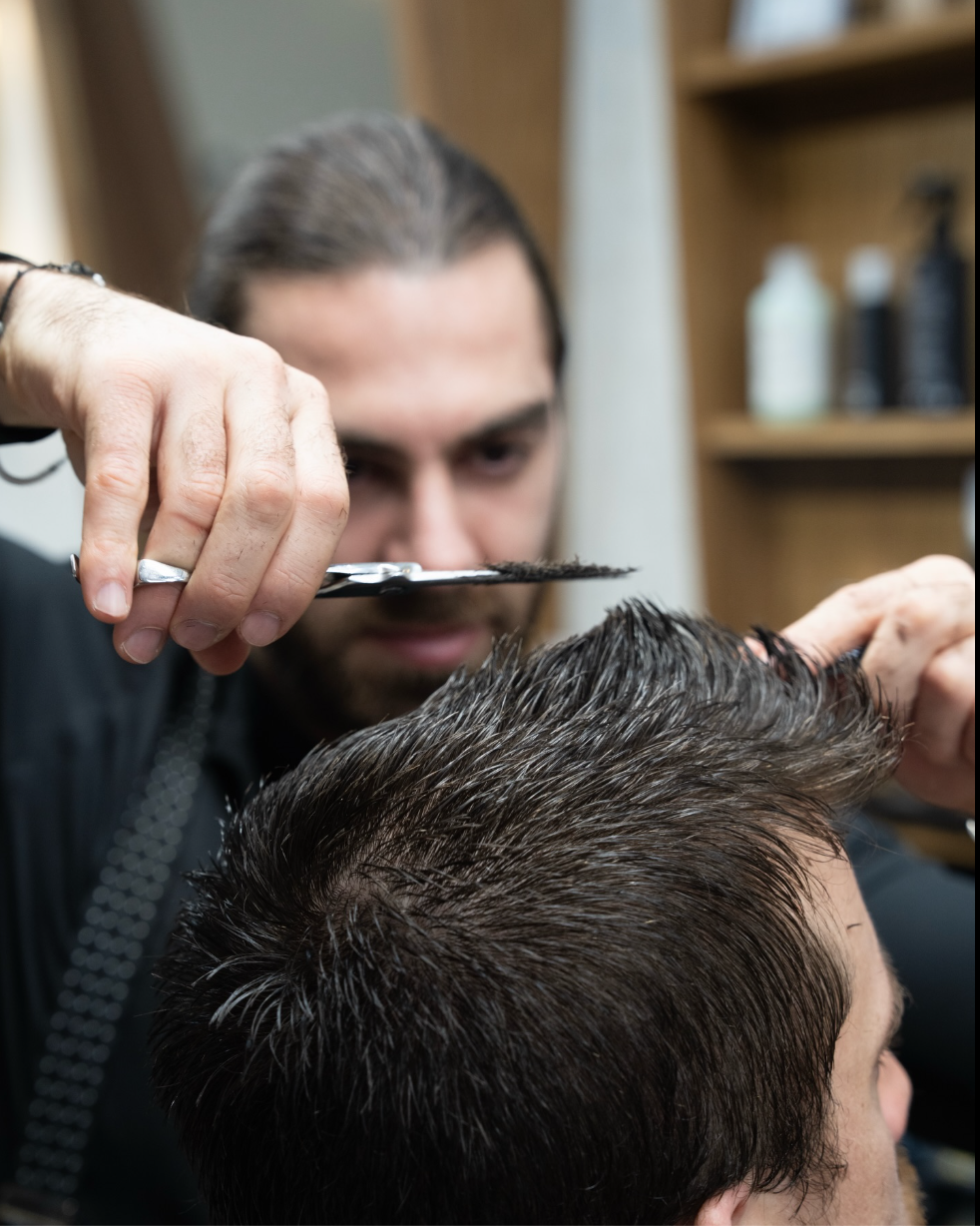
What Should a Professional Man Ask His Barber for in 2026?
For most professional men, the best request isn't the name of a trendy haircut.
It is a description of the outcome.
Tell your barber:
how much scalp you want visible
how much weight you want retained on the sides
how long you want the top
whether you wear it forward, back or parted
how much time you realistically spend styling it
how frequently you plan to return
whether your workplace calls for a more conservative finish
And bring a photograph.
A reference image doesn't lock you into that exact haircut. It gives the barber a visual starting point that can be adapted to your hair density, growth pattern, texture and face.
What If You’ve Been Getting Skin Fades for Years?
Don't simply stop cutting your hair.
Instead, change what is being cut.
A practical transition might look like this:
First cut: Stop taking the sides to skin. Use a low taper or very conservative perimeter cleanup.
Next 4–8 weeks: Allow the upper sides and back to gain length while continuing to clean the neckline, around the ears and any areas that become untidy.
Following visits: Begin shaping the additional length with scissors so the sides connect naturally to the top.
Final stage: Decide whether you want to maintain a classic taper, side-swept style, fuller textured cut or continue growing.
One of the biggest mistakes during the transition is repeatedly “cleaning up” the very areas you're trying to grow.
Why Softer Cuts Can Work Especially Well for Men Over 40
Age isn't the important variable.
Hair density is.
A man in his 40s or 50s may have less density at the temples or crown than he had at 25, even while still having an excellent head of hair.
An aggressive skin fade can sometimes increase the visual contrast between exposed scalp, thinning areas and fuller hair on top. Keeping controlled weight through strategic areas may produce a more balanced silhouette.
Current 2026 grooming guidance for men over 40 similarly emphasizes adapting the haircut to actual density, recession and texture rather than attempting to reproduce the exact cut a man wore decades earlier.
That doesn't mean every man with thinning hair should grow his hair.
Often the opposite is true.
It means the placement of weight and contrast matters more than chasing a trend.
A skilled men's hairstylist or barber should be able to determine whether your hair benefits from additional texture, shorter length, a taper, a crop or something else entirely.
Gray Blending Fits the Same Philosophy
The shift toward natural-looking men's grooming does not stop at the haircut.
Gray blending is designed to reduce the contrast of gray hair without making the hair appear uniformly dyed.
Gentleman's Grooming Lounge Stamford offers a dedicated gray-blending service that the shop describes as a subtle alternative to full coloring, blending gray strands with the natural hair color rather than attempting to erase every gray hair.
That approach fits remarkably well with softer 2026 hairstyles.
The intention isn't:
“Make me look like I have no gray hair.”
It's closer to:
“Make the gray look deliberate rather than uneven.”
For many men, keeping some gray can actually be part of the look.
A Stamford Perspective: The Haircut Has to Work All Day
Men in this part of Connecticut have an unusual style requirement.
The same haircut may need to work for a morning in a Stamford office, a client meeting in Manhattan, dinner around Bedford Street and a weekend in Greenwich or elsewhere in Fairfield County.
That's precisely where the softer trend becomes practical.
A low taper, scissor taper or naturally textured professional cut can remain polished enough for work while avoiding the overly engineered appearance of a dramatic high skin fade.
It is also well aligned with Gentleman’s Grooming Lounge itself.
The downtown Stamford shop positions itself around classic barbering combined with modern men's styling, with an upscale, vintage-influenced lounge environment at 1 Atlantic Street.
More importantly, there is real technical depth behind the chairs.
Goni is a second-generation barber who went on to earn a full cosmetology license and specialize in men's hairstyling. Peter Palushi comes from a barbering family, became Croatia's youngest national barbering champion at 17, and later worked at establishments including Truefitt & Hill and The Art of Shaving.
That barber-and-hairstylist overlap becomes particularly valuable when a client wants something more nuanced than “a two on the sides.”
Common Questions Men Are Asking About Tapers, Fades and Professional Haircuts
Is a taper more professional than a fade?
A taper is generally the more conservative choice because it retains more hair around the sides and neckline and produces less scalp contrast. However, a well-executed low fade can also be completely appropriate in most modern professional environments.
For traditional finance, legal or corporate settings, a low or classic taper is the safer option.
What is the difference between a low taper and a low fade?
A low taper gradually shortens hair primarily around the sideburns and neckline while retaining hair at the shortest point. A low fade creates a stronger transition and may take the hair down to skin near the bottom.
The taper therefore produces a softer appearance and generally retains more visual weight.
What should I tell my barber if I don't know haircut terminology?
Describe what you want to see rather than relying on barber terminology: how short you want the sides, whether you want visible scalp, how you style the top and how often you're willing to maintain the cut. Bring one or two reference photos whenever possible.
A competent barber can translate those preferences into the appropriate technique.
Should I bring a picture of the haircut I want?
Yes. A reference photo is one of the clearest ways to communicate shape, length and overall style to a barber. Your barber can then modify the reference for your hair texture, density, growth pattern and face rather than attempting to copy it literally.
Current search content around professional haircuts consistently emphasizes visual references as a useful consultation tool.
FAQ: Softer Men's Haircuts for Fall 2026
How often should I get a soft taper?
A soft taper typically tolerates growth better than a skin fade because there is less dramatic contrast at the shortest point. The ideal schedule depends on hair growth and how exact you want the perimeter to remain.
Is a low taper good for thinning hair?
It can be, but there is no universal answer. The barber needs to evaluate where the thinning occurs. Preserving some weight can help in certain areas, while excessive length may make other forms of thinning more visible.
Can curly hair work with a soft taper?
Yes. A taper can preserve considerably more curl and volume than a high fade while still keeping the sideburns and neckline clean. Current professional barber guidance specifically identifies tapers as well suited to textured hair when the goal is to maintain volume.
Is a scissor cut better than clippers?
Neither tool is inherently better. Clippers excel at precision and shorter graduation. Scissors offer more flexibility when preserving length, movement and weight. Many sophisticated men's cuts use both.
What's the best haircut for gray hair?
There isn't one. Density, texture and face shape matter more than hair color. Classic tapers, textured crops, crew cuts and side-parted styles can all work extremely well with gray hair.
Should a man cover all of his gray hair?
Not necessarily. Gray blending can reduce contrast while deliberately leaving some gray visible, producing a more natural result than full coverage. Gentleman’s Stamford offers this service specifically as an alternative to harsher full coloring.
What haircut works for a conservative office?
A classic taper, low taper, crew cut or understated side part are among the safest options. Avoiding extreme contrast usually makes a haircut feel more traditional even when the styling on top is contemporary.
How do I know which version will work on me?
Hair density, texture, head shape, face shape, recession patterns and your willingness to style the cut every morning all matter. That's why a consultation with the person actually cutting your hair is more useful than choosing a haircut solely because it looks good on someone else.
The Bottom Line
The skin fade isn't dead.
It simply no longer has to be the automatic answer to “make it clean on the sides.”
The more interesting direction for Fall 2026 is precision without severity: softer tapers, scissor work, natural texture and cuts that continue looking intentional after the first week.
For a professional man in Stamford, that may be the biggest advantage of the trend.
The haircut looks less like something you had done to you and more like it simply belongs to you.
If you're thinking about moving away from a skin fade but aren't sure how much length to keep, call us to book a cut or consultation at Gentleman's Grooming Lounge Stamford and bring a reference photo. Or simply describe the result you want.
The right barber can determine how to adapt it to your hair, your workday and the amount of maintenance you're actually willing to do.
Check out our photos for a visual look at the shop.